
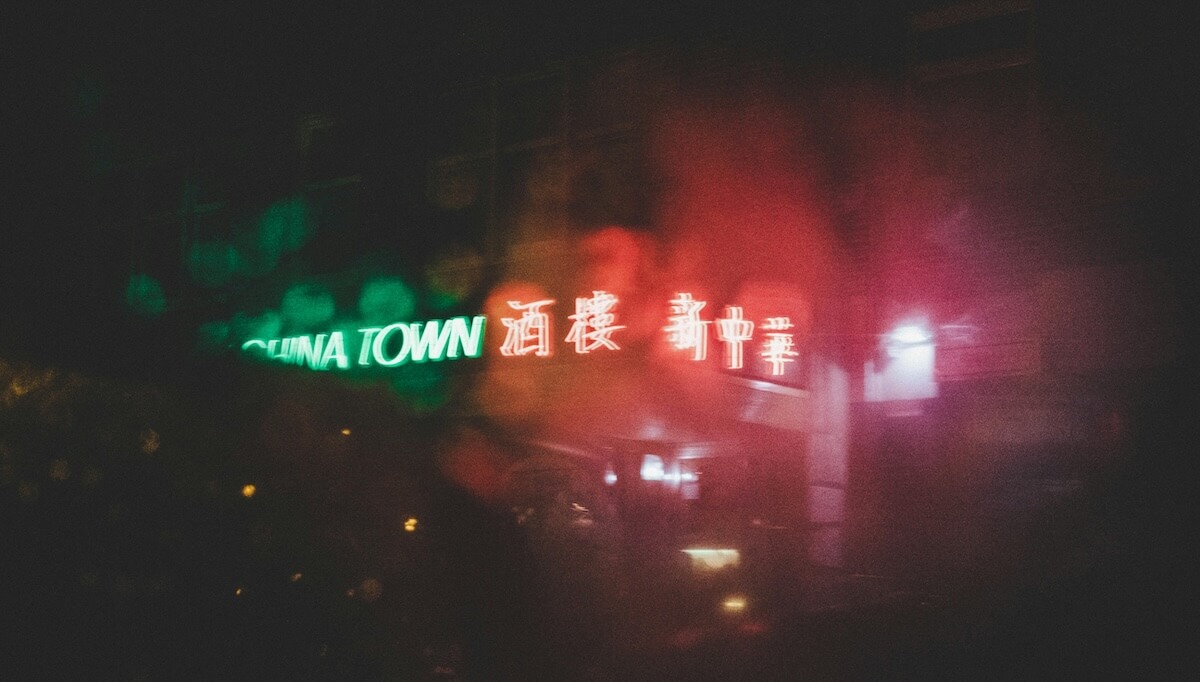
Michael Cimino’s Year of the Dragon is an action thriller that keeps audiences pondering but unfolds anything but ponderous.
The film was the meticulous director’s comeback after Heaven’s Gate, a 1980s flop, which was met with a fierce, near-universal critical backlash that nearly destroyed Cimino’s career (The film has received many reappraisals as a masterpiece, but that’s the subject of another article).
Adapting Robert Daley’s novel of the same name, Cimino would co-write Year of the Dragon with the legendary Oliver Stone – fresh off the success of writing Scarface.
But even with a hot new writing partner (and, no, not romantically speaking), the comeback wasn’t quite on.
The film grossed approximately $30.4 million at the worldwide box office against a budget of $21.5-$24 million.
And though reviews were mixed, it wasn’t critics in uproar this time – Chinese-American and Asian-American communities protested against the film, potentially harming its box-office take.
The communities were reportedly upset at how the film would affect Chinatowns, discouraging commerce and making them unsafe.
You can also understand that the very real racial slurs used in the movie and the potential xenophobia of its characters didn’t go over well (more on this later).
Still, despite the movie’s financial struggles and lack of popularity in 1985, the film has emerged as one of those cultish movies.
Frantic and layered, as well as featuring performances from acclaimed actors Mickey Rourke and John Lone, you’ll find plenty a Reddit thread or positive YouTube comment about the flick.
So is Year of the Dragon a good movie?
The Plot of Year of the Dragon:
New York City Police Captain Stanley White (Mickey Rourke) gets assigned to Manhattan Chinatown, and that’s bad news for the locals.
While an unofficial arrangement between authorities and Chinatown leaders has stood for some time, Stanley isn’t having it. Like that prototypical new sheriff in town, he wants to crack down on the organized crime operating within it.
Back at home, things aren’t going so well between workaholic Stanley and his wife, Connie (Caroline Kava).
Meanwhile, in Chinatown, Joey Tai (John Lone) is rising to power. As the new head of the Chinese Triads, he brings the vigor of youth all right – upending relations with the Italian mafia and the Thai gangsters they work with for importing heroin.
As Stanley begins his war with Joey Tai, he recruits local reporter Tracy Tzu (Ariane Koizumi) to hit Tai hard in the press.
And something hard-hitting but in a much different way happens between Stanley and Tracy — soon, the two begin an affair.
Stanley also sends undercover agent Herbert Kwong (Dennis Dun) to infiltrate Tai’s operations and provide information.
As Stanley and Tai’s conflict explodes, who will survive their escalating conflict?
The Rest of the Main Cast Includes:
- Leonard Termo as Angelo Rizzo
- Raymond J. Barry as Lou Bukowski
- Victor Wong as Harry Yung
- Eddie Jones as William McKenna
- Joey Chin as Ronnie Chang
- K. Dock Yip as Milton Bin
- Daniel Davin as Francis Kearney
- Pau Hon-Lam as Fred Hung
- Mark Hammer as Commissioner Sullivan
- Jack Kehler as Alan Perez
- Jilly Rizzo as Schiro
- Tony Lip as Lenny Carranza
- Yukio Yamamoto as Ban Sung
- Fan Mei-sheng as “White Powder” Ma
- Chen Chao-jung as Jade Cobra
- Roza Ng Leung as Laura Wong Tai
What’s Working Well Here:
Dragon vs. Dragon, +3 Points
Captain Stanley White, Year of the Dragon’s main character, must not have watched the Jack Nicholson classic Chinatown.
You know how, in the end, they tell Jake Gittes, the main character, to “forget it, Jake – it’s Chinatown”?
Well, in this whole movie, people just keep telling Stanley about the same thing.
Because while Stanley is a cop and not a private investigator like Gittes, and while Stanley is humming around New York Chinatown and not that of L.A., a similar principle rules: there’s a code to how things are done in Chinatown, one you can’t interfere with, even if you try.
And in this film’s unspoken deal, the police let things go in exchange for a lid on the crime, lest it not spill over into behavior the police department isn’t willing to tolerate.
But Stanley White just doesn’t get that message. He’s willing to burn down or tear through anything over his obsessions with stopping the Chinese triads.
Then there’s Joey Tai, the young upstart hell-bent on taking power. He’ll sabotage his own leaders with his gang of thugs, kill anyone in his way, and do what it takes to make it to the top of the triad.
I liked how the movie built around this issue of the two men battling it out, both fighting a similar war within but from opposite sides of the law – fighting each other and the men around them.
Stanley’s conflict is much more well-rounded as a character, as he has his wife, Connie, with whom he struggles to stay connected while burying himself in his police work. And then there’s his new affair, Tracy, who, yeah, we’ll get more into in a minute.
Joey Tai doesn’t grasp this level of detail, and we need to view him more as an iceberg (more on this later).
Still, the heat between these two produces plenty of sparks, culminating in the railroad tracks shootout finale.
Shock Me, Amadeus, +2 Points
While the film isn’t as violent as, say, the chainsaw scene of the Oliver-Stone-written Scarface, just two years earlier in ‘83, when it’s time for the Chinese mafia to move, they kill in ruthless, bloody fashion.
There are savage, sudden depictions of brutal murder you didn’t know the film had in it — though now that I said that, I guess you will.
And when there are gunfights, there’s a seeming lack of police protocol in sight, with Officer Stanley and other officers opening fire in the middle of screaming crowds. He tries to aggressively put down disorder instead of keeping order.
The scenes are edited in a frantic, quick-cutting fashion. It’s not the stuff of action movies after spectacle but perfect for this action thriller after the before and aftermath.
Sets to Fool Kubrick, +4 Points
The film is a guided tour through Chinatown – its high life and nightlife, its music clubs, restaurants, and underground factories.
Cimino and crew give us an intimate view of the working class and gang leaders of what feels like an Eastern island on dry land.
Surprisingly, the film was shot on sound stages, not location. A full-scale recreation of Manhattan Chinatown was built on the De Laurentiis Studios backlot in North Carolina – saving money.
Rumor has it the sets, which look incredibly realistic, fooled Bronx-born Stanley Kubrick, who attended the film’s premiere.
Cimino also shot in several cities, including New York, Toronto, Bangkok, and more. There’s even a scene that cuts seamlessly from a textile mill in Bangkok, a guardrail in New York, and an apartment building in Wilmington. Rumor has it the film’s script supervisor lost a $1,000 bet, confident the scene wouldn’t cut together. But it did. Still, Cimino didn’t elect to collect on the wager.
Altogether, the sets and locations are integral to the atmosphere, and the production nailed it.
Cameras, Cameras, Cameras, +4 Points
Year of the Dragon boasts the work of highly acclaimed Cinematographer Alex Thomson. And Thomson, Cimino, and crew weave in and out of the city with two camera weapons: plenty of up-close Steadicam or pulling back for gorgeous views in wide 2:35:1 anamorphic format.
The opening of the film introduces us to the glitter and dangers of Chinatown, much like a guided tour through the streets that unfolds alongside Tracy’s news report.
And scenes are ripe with color and framing. The film moves seamlessly through crowded interiors and wide-open exteriors. We get the grandiose nature of Harry Yung’s restaurant, the sweaty toiling of workers in the underground bean factory, and the vistas of Thailand.
As the movie’s tour changes, so does the angle – always cleverly positioned.
Score Two for the Score, +2 Points
David Mansfield’s Golden-Globe-nominated score is your tour guide through Chinatown and the inner workings of each character’s mind.
The opening theme and some red lettering are all you need to get into the film. Some minor chipping on the Eastern-style strings and roiling drums warn of the serious heat bubbling up on the surface here.
When Tai tries to bribe Stanley, we get the more Western orchestral sounds to convey, ‘Uh-huh, this man can’t be bought.’ It’s all right there in the swooning and rising of the strings. And, damn, if this isn’t a pivotal moment in the movie.
Try not to go into sympathy for Stanley and Connie when “Separation Fight” ticks away on a guitar like tears falling into the saddest pond on the map.
And tracks like “Soybean Basement” give us the pride and dread of life toiling in the underground working class of Chinatown.
What’s Not Working So Well Here:
Differing Performances, -2 Points
Rourke’s Stanley has that curmudgeon quality — likable to audiences but unlikeable to those around him.
Many audiences praised Rourke’s performance, but I found him inconsistent, like that annoying wire on your headphones that plays beautifully but then gets pinched and stops playback. Here, Rourke is full of charisma but suddenly a bit hammy.
Rourke’s flittering performance may have to do with the writing, which was surprisingly expositional at times (more on that in a minute).
And Stanley’s hairstyle kept distracting me. It appears to be dyed white to age Rourke for the role, but it’s as if he combed it to stand out on the sides intentionally. Call this a nitpick if you want, but the look of a character makes a difference, and it was bothersome.
When it comes to Ariane’s Tracy Tzu, when she’s walking around her apartment nude or mostly nude, a graceful model in real life, yeah, you can see how she could seduce Stanley.
But her casting is poor because acting wasn’t in her skill set. She delivers lines like she’s reading them from a script held just out of view.
These mixed performances are a shame because John Lone is on fire every time you see him.
What spinach was to Popeye, a lit cigarette in hand seems to be to John Lone’s Joey Tai.
The reigned malice of Tai is ever-present. You buy into his calculations when he tells the old guard to back off and that things are under control. The men around him know not to step out of line when he busts out a decapitated head of a rival, plopping it on a plate like leftovers.
Let Me Just Gift Wrap the Point Here, -2 Points
The film opens with a lot of wooden expositional dialogue. Always burying exposition in your story is tough to accomplish. So I was willing to let this go.
But the film had messages for its audience. And rather than demonstrating these tactfully through character development, it chose to be direct, cutting the thematic flirting and coming right out and declaring its intentions.
Dennis Dunn’s Herbert Kwong, Stanley’s undercover agent, complains to him. But he rattles off a list of Chinese people’s accomplishments throughout history.
While Herbert’s pride in his people fits the moment in the story, it sticks out. Heavy-handed statements plopped into the movie are a big no-no because the whole point of theme is to demonstrate what you mean instead of just writing it explicitly in a tacky fashion.
What About Herbert (and others)? – 2 Points
**Spoiler Alerts Here**
Despite a long runtime, some things in Year of the Dragon felt underdeveloped.
We don’t get to know Joey Tai outside of plotting, and I wish we did. Maybe he’s more sympathetic than we realize, or he’s more of a sicko than we know.
And some things feel left out. Most of the conflict between the Triads and the Italians is discussed rather than shown.
Herbert, the undercover cop, isn’t blessed with much screen time. He’s given that pivotal speech, all about his pride in Chinese history.
Still, we needed more of Herbert and Stanley’s relationship developing in the story. It could have helped soften Stanley’s views. We could have seen Stanley and his growing relations with the Chinese not just through Tracy but also through Herbert, learning to undo some of the Vietnam-veteran’s prejudice toward Asian cultures.
But the biggest flaw? I don’t know what Stanley learned.
His victory is shown as hollow — after Tai’s death, another triad boss’s funeral. The show goes on; the same corrupt, greasy wheels keep turning. It’s a pyrrhic victory.
Stanley wins but loses, admitting to Tracy that she was right and he was wrong, that he’d like to be a nice guy but doesn’t know how.
However, this is more of an apology for himself than a genuine change.
Racism? -2 Points
Oh, boy. Like a petting zoo with a hedgehog, I saved this spiky issue for last.
This film has been accused of being racist in its depiction of Chinese Americans, and it’s not hard to see where that comes from.
So Stanley and many of his officers throw out xenophobic slurs at their Chinese counterparts – yellow N words, the one that rhymes with sink – yeah, those awful words.
And fortunately, the film’s final lines were revised.
At the end of the movie, Stanley says, “You were right, and I was wrong. I’d like to be a nice guy. But I just don’t know how to be nice.”
But According to Cimino, the original lines, as Stanley hugs his love, the Asian female Tracy, were, “Well, I guess if you fight a war long enough, you end up marrying the enemy.”
WOW. That’s a hell of a change. That line would have been a pretty big bombshell over into the hell yes, this is racist argument.
Thankfully, it’s said that Cimino thinks the studio or producers thought that line was politically incorrect and changed it.
Hah! Yes, that’s one of the few times I’d have to side with a studio note. Can you imagine the crisis with a line like that? Ick.
And just to make things more spicy and dicey, The Los Angeles Times said Tracy’s character was “there to fulfill all Oriental-woman fantasies.”
Oi-vey. You don’t know whether to shake your head because that theory is possible and gross or because The Times is being critical of the film’s depiction of Asian women while using the slur “Oriental” to describe them.
What I didn’t read anywhere that 1980s audiences found offensive is that Ariane, who played Tracy, is part Japanese and, from what I can tell, not Chinese. I would have thought the political history of those two countries could have upset many over her casting.
In defending the film, Cimino has said in an interview with Jeune Cinema:
“The film was accused of racism, but they didn’t pay attention to what people say in the film. It’s a film which deals with racism, but it’s not a racist film. To deal with this sort of subject, you must inevitably reveal its tendencies. It’s the first time that we deal with the marginalization which the Chinese were subject to. On that subject, people know far too little. Americans discover with surprise that the Chinese were excluded from American citizenship up until 1943. They couldn’t bring their wives to America. Kwong’s speech to Stanley is applauded. For all these reasons, the Chinese love the film. And the journalists’ negative reactions are perhaps a shield to conceal these unpleasant facts.”
So when you look at Cimino’s words, I think the flaws in this movie have more to do with its clumsiness in how it handles the racism than its intent.
It’s true Herbert stands up to Stanley and, in a show of pride, talks about the Chinese’s treatment and history. If Cimino or Oliver Stone wanted to demonstrate hateful things toward Chinese Americans, they wouldn’t include a speech with facts about the Chinese’s mistreatment.
But unless I missed it, when does Stanley ever acknowledge he’s been wrong? Look at the ending lines they were going to go with until the studio told them not to!
Without a remorseful shift in attitude from Stanley, I don’t think audiences find the message in the film.
This issue got big enough (more on this later) that they actually put a disclaimer on the movie,
“This film does not intend to demean or to ignore the many positive features of Asian Americans and specifically Chinese American communities. Any similarity between the depiction in this film and any association, organization, individual or Chinatown that exists in real life is accidental.”
For me, anytime your lawyers have to put that kind of disclaimer on something, you’ve messed up.
So while the movie had good intentions, many feel it’s racist. But I can also say that wasn’t on purpose. Although, that doesn’t magically make everything okay. So whether or not this cloud of potential bigotry affects your decision to watch the movie is up to you.
I also reserve the right to be wrong here and am open to that.
Should I Watch Year of the Dragon?
Total Score: 7 Points
Year of the Dragon can stand up as a wholly competent action thriller. You’ve got Mickey Rourke’s charisma, even in a wavering performance, and John Lone absolutely tearing it up.
It pits the two against each other like two snarling dragons with plenty of conflict. As the plot is peppered with shocking scenes of violence, things get heavy and hazy.
And you’ll be taken in by the film’s score and wowed by its impressive sets and fantastic shots.
But I think it was after more story and themes than simple thrills, and I don’t buy that the movie wrapped up everything it wanted to do.
Its 134-minute runtime hints aiming higher than straight entertainment. And with a meticulous creator like Michael Cimino directing, you feel something didn’t quite gel in this movie.
It leaves the points it wanted to make about the Chinese people to random expositional dialogues rather than thematic fulcrums. So clumsy, in fact, that the film is seen as racist by some.
And it doesn’t take the turns into filling out its more minor characters or subplots as thick as you’d think it could.
Still, while audiences will have to turn to films like The Godfather for fully-realized epic crime sagas, those seeking action thrillers with a few tricks could do a lot worse than Year of the Dragon.
Year of the Dragon’s Legacy:
So what is the legacy of Year of the Dragon?
Well, as I mentioned, it’s plenty of fans’ so-called underrated movie from the 1980s, with many looking back on it fondly.
As the film sparked protests over its portrayal of Chinese-Americans, it’s fair to say it contributed to the larger conversation about representation in Hollywood. After all, this was 1985. That’s just a year after the infamous character Long Duk Dong appeared in John Hughes’s Sixteen Candles.
And if people want to give Michael Cimino or other parties shit for mistakes in this movie, that’s fair. But I think you need to take a long, hard look at Long Duk Dong by John Hughes first.
In an NPR statement of 2008, Long Duk Dong or, quote, “The Donger,” was called a “stain” on Hollywood’s history representing Asian characters.
And, yeah, that character is a skid mark, all right. You can understand the outrage over a deliberate attempt to make audiences laugh by exploiting stereotypes.
John Carpenter’s Big Trouble in Little China, released a year after Dragon in 1986, also faced criticism and allegations of racism toward Chinese Americans.
And not to keep digressing, but I find that surprising. Again, it’s anyone’s right to judge what’s offensive.
But Big Trouble in Little China made the supposed white savior into a dufus while all of the Asian characters around him were the capable ones.
To be fair, I think the criticisms were more around reinforcing potentially negative Asian stereotypes of mysticism, running brothels, etc., which you can understand.
My point is that Year of the Dragon arrives at a moment in the mid-1980s when depictions of Asian characters sparked controversy and representation needed discussion.
Year of the Dragon was adapted from the book of the same name by Robert Daley. Daley would have six books adapted into films, including two by the acclaimed director Sidney Lumet, Night Falls on Manhattan and Prince of the City.
Director Michael Cimino is best known for his acclaimed film The Deer Hunter. He had also made Thunderbolt and Lightfoot with Clint Eastwood as well as, of course, Heaven’s Gate.
Year of the Dragon wasn’t quite the stellar comeback for the vaunted director after Heaven’s Gate’s failure. Still, the film did enough business for him to continue his career.
He would go on to direct The Sicilian, an adaptation of a Mario Puzo novel (author of The Godfather). After that, it was the neo-noir action thriller Desperate Hours, once again with Mickey Rourke. And lastly, he made The Sunchaser, released in 1996, with Woody Harrelson and Jon Seda.
From what I can tell, it doesn’t look like any of these three films made money or won over many fans, including both critics and casual audiences.
Mickey Rourke, of course, has continued his Mickey Rourke career. You may know him from films such as Once Upon a Time in Mexico, The Wrestler, Sin City, Buffalo ‘66, and many more. He’s well-known for both his talent and potential baggage, and I’ll just leave it at that.
After John Lone kicked ass in this movie, Michael Cimino recommended him to his pal, filmmaker Bernardo Bertolucci. Bertolucci cast him in The Last Emperor, a film I haven’t seen in ages and should be explored on this blog at some point.
The role of Emperor Puyi in The Last Emperor netted Lone another Golden Globe nomination, this one for best actor. He also received an Independent Spirit Award nomination for The Moderns. From there, Lone appeared in films like David Cronenberg’s M. Butterfly; The Shadow, with Alec Baldwin; Rush Hour 2, with Jackie Chan; and War with Jet Li.
Ariane didn’t pick up too many movie roles after this one. She appeared in Abel Ferrara’s King of New York, a small appearance as herself, and three things after I have no idea what they were. But it says on her Wikipedia page that she continued her modeling career until 1989, which sounds successful. And she did a few other things and raised three kids. So it sounds like her life and career have been fruitful.
Apologies to any actors I didn’t highlight.
Oliver Stone went on to make Platoon, which this movie paved the way for. Cimino had read and been impressed by Stone’s unproduced script for Platoon. So a deal was struck: if Stone worked on Year of the Dragon for a lower fee, Dino De Laurentiis would help find the funding for Platoon.
I think Stone has alleged in an interview that he and De Laurentiis’s deal didn’t exactly come off like that, with Stone having to sue him. But I don’t think we’ll get into that here. And, again, that’s allegedly. I certainly wasn’t there.
But Stone’s Platoon got made and would go on to win 8 Oscar nominations, including 4 wins – Best Picture; Best Director, for Stone; Best Sound; and Best Film Editing.
So in leading directly to Platoon, Year of the Dragon very much propelled Oliver Stone’s career.
Lastly, Stanley White’s large caliber pistol, the Desert Eagle, is apparently the handgun’s first appearance on film. And it makes a loud debut, I’ll say. Apparently, that handgun’s manufacturer lobbied the film industry to include it in their pictures, and it has since appeared in hundreds, if not thousands, of movies.
Well, that’s all I have. Thank you for reading.
Enjoyed this Post?
Thank you so much. If you’d like to get a ping when I have a new article, you can join my newsletter below.
Disclaimer:
This review’s factual information was gathered through online sources, like Wikipedia, IMDB, or interviews. Misrepresentations and errors are possible but unintentional.
Making art is hard. This is a fan’s blog. Any criticisms are meant to be constructive.


